NCERT Class 12 Biology · Animal Husbandry, Plant Breeding & Biotechnology in Agriculture · Strategies for Enhancement in Food Production
1. Introduction to Food Production Strategies
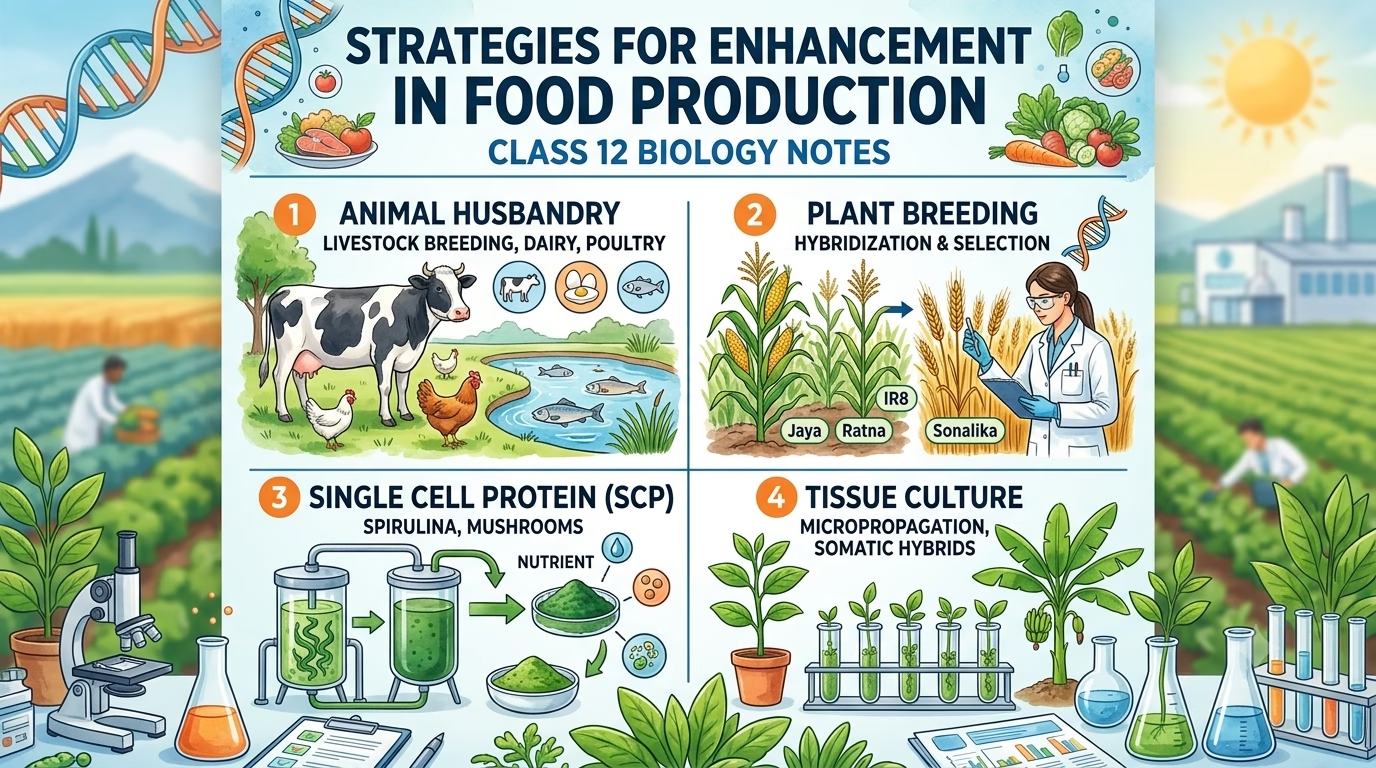
Enhancing food production isn’t just about growing more, it’s about growing smarter. Biologists use two broad routes to do this:
- Animal husbandry– improving livestock, poultry, and aquatic animal yields.
- Plant breeding and biotechnology– developing crop varieties with higher yield, better nutrition, and built-in resistance to disease, pests, and environmental stress.
Together, these strategies were the backbone of India’s Green Revolution (higher crop yields, 1960s onward) and White Revolution (milk production boom), and continue today through modern genetic engineering and micronutrient-rich “biofortified” crops.
2. Animal Husbandry
Animal husbandry is the scientific management of livestock- it covers breeding, feeding, and disease control of animals raised for food, labour, or other products. It includes cattle and buffalo rearing, poultry farming, and fisheries.
Dairy Farm Management
Milk yield and quality depend on more than genetics alone. Good dairy management involves:
- Breed selection: choosing breeds with high yielding potential and natural disease resistance.
- Housing and hygiene: clean, well-ventilated shelters to prevent infection.
- Scientific feeding: balanced fodder suited to the animal’s age and milk output.
- Regular veterinary care: routine check-ups and prompt treatment.
- Record keeping: modern dairies track lineage, milk yield, and health records digitally to guide future breeding decisions.
Poultry Farm Management
Poultry farming covers birds raised for meat and eggs- chiefly chickens, but also ducks and turkeys. Successful poultry management focuses on:
- Selecting disease-free, genetically superior parent stock
- Maintaining safe, hygienic housing conditions
- Providing a nutritionally balanced feed and clean water supply
- Protecting flocks from seasonal disease outbreaks such as avian influenza
Exam tip: A common mix-up is treating “Dairy Farm Management” and “Poultry Farm Management” as the same category. Remember: dairy = milk from cattle/buffaloes; poultry = meat and eggs from birds.
3. Animal Breeding
A breed is a group of animals related by descent, sharing similar appearance, size, and other traits. The two goals of animal breeding are to increase yield and to improve the quality of animal products (milk, meat, eggs, wool).
There are two main breeding strategies: inbreeding and out-breeding.
Inbreeding
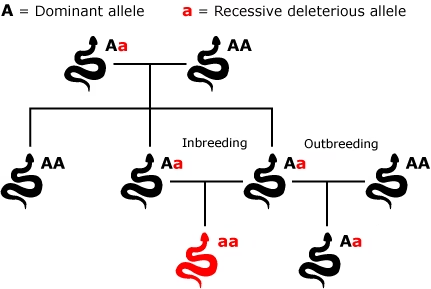
Inbreeding means mating closely related individuals of the same breed for four or more generations. Superior males and females are identified- superior females are those producing more milk per lactation, and superior males are those known to sire high-quality progeny- and mated selectively.
- Increases homozygosity, producing a genetically “pure line.”
- Helps accumulate and fix desirable (superior) genes in a population.
- Risk: it can also concentrate harmful recessive genes, and prolonged inbreeding may cause inbreeding depression– a decline in fertility and productivity.
Out-breeding
Out-breeding is the practical solution to inbreeding depression. It includes three approaches:
| Type | Definition | Example |
| Out-crossing | Mating between animals of the same breed with no common ancestors for 4–6 generations. Used to improve below-average productivity without changing the breed. | A low-yield cow mated with an unrelated bull of the same breed |
| Cross-breeding | Mating a superior male of one breed with a superior female of another breed, combining desirable traits of both, known as hybrid vigour (heterosis). The offspring is called a hybrid. | Hisardale sheep: a cross between Bikaneri ewes and Marino rams |
| Interspecific hybridisation | Mating males and females of two related but different species, combining desirable traits of both parent species. | Mule- hybrid of a female horse and a male donkey |
4. Controlled Breeding Techniques
Artificial Insemination (AI)
Semen is collected from a genetically superior male, and either used immediately or frozen for later use. It is then artificially introduced into the reproductive tract of the female. AI allows breeders to use elite males across many females, even across long distances and after the male’s death , without natural mating.
Multiple Ovulation Embryo Transfer (MOET)
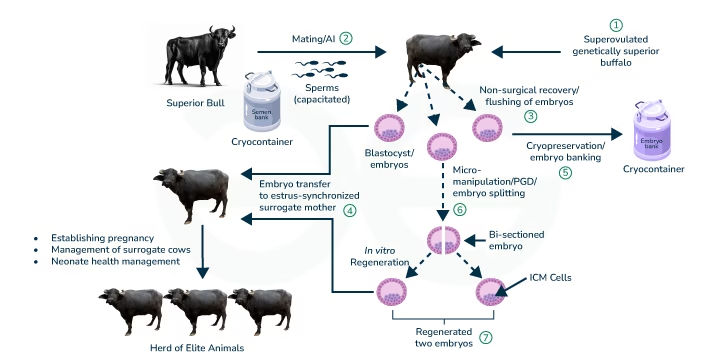
MOET is a technology that allows a single high-quality female to produce far more offspring than she naturally could. The process:
- The cow is given an FSH-like hormone that induces super-ovulation, instead of the usual one egg per cycle, 6–8 eggs are released.
- The cow is mated naturally with a superior bull, or artificially inseminated.
- Fertilised eggs are non-surgically flushed out at the 8–32 cell stage.
- These embryos are transferred into surrogate mother cows, which carry them to term.
MOET has been used successfully to rapidly multiply high milk-yielding dairy cows and lean meat-yielding bulls, buffaloes, sheep, and goats.
5. Apiculture (Bee-keeping)
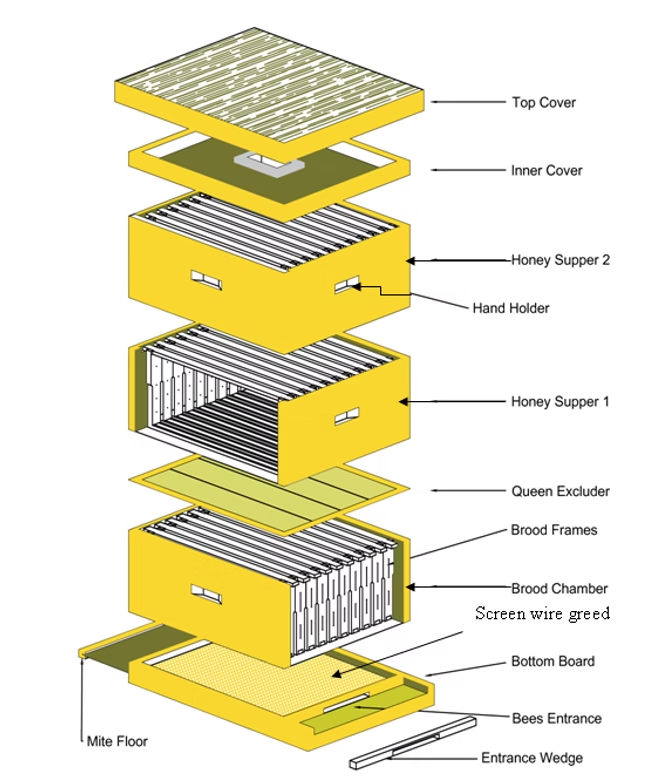
Apiculture is the practice of maintaining beehives to produce honey and beeswax. It is not labour-intensive and can be taken up alongside farming with minimal extra land.
Why it matters
- Honey has high nutritive and medicinal value.
- Beeswax, a by-product, is used in cosmetics and polish manufacturing.
- Bees also improve crop yields nearby through pollination, an often-overlooked benefit of bee-keeping for farmers.
- Apis indica is the most commonly reared honeybee species in India.
Skills required for successful bee-keeping
- Understanding bee behaviour and colony habits
- Choosing a suitable location to place beehives (near flowering crops, away from pesticide spraying)
- Catching and hiving wild swarms
- Managing hives across different seasons
- Safely handling and harvesting honey and beeswax
6. Fisheries & the Blue Revolution
Fisheries covers the catching, processing, and selling of fish, shellfish, and other aquatic animals such as prawns, crabs, and lobsters. It’s one of the fastest-growing sectors of Indian agriculture.
| Category | Examples |
| Edible freshwater fish | Catla, Rohu |
| Edible marine fish | Hilsa, pomfret, sardine |
Aquaculture and pisciculture are the technologies used to commercially rear fish and other aquatic species, often in controlled ponds or tanks rather than relying solely on natural water bodies.
What is the Blue Revolution? Just as the Green Revolution transformed crop yields, the Blue Revolution refers to India’s drive to scientifically boost fish and aquaculture production- improving fish farming techniques, hatcheries, and inland/marine fisheries management to meet rising demand for protein-rich food.
7. Plant Breeding
Plant breeding is the deliberate manipulation of plant species to create varieties better suited for cultivation, higher-yielding, higher-quality, and more resistant to disease and environmental stress.
- Classical plant breeding: crossing superior pure lines and selecting plants with desirable traits, without modern molecular tools.
- Modern plant breeding: uses molecular biology and genetic engineering to speed up and precisely control trait selection.
Desirable traits targeted by plant breeders
- Increased crop yield
- Improved nutritional and processing quality
- Tolerance to environmental stresses (drought, salinity, heat, cold)
- Resistance to pathogens (fungi, bacteria, viruses)
- Resistance to insects and pests
Steps in Breeding a New Crop Variety
- Collection of genetic variability: Wild relatives and varieties of the crop are gathered and preserved. This entire collection of diverse alleles is called a germplasm collection, and it’s the raw material for all future breeding work.
- Evaluation and selection of parents: The germplasm is screened to identify plants carrying the desired traits.
- Crop hybridisation among selected parents: Pollen from one selected parent is transferred onto the stigma of another, combining traits from both.
- Selection of superior recombinants: Hybrid offspring are carefully evaluated, and only those combining the desired traits are selected, ideally superior to both parents.
- Testing, release, and commercialisation: Selected lines are tested for yield, quality, and resistance in research fields, then trialled by farmers across multiple locations for at least three growing seasons, compared against the best existing local variety before being officially released.
8. Indian Hybrid Crop Varieties
Wheat and Rice
Wheat and rice production rose sharply in India during the 1960s, largely due to Norman E. Borlaug’s development of semi-dwarf wheat varieties- shorter, sturdier plants that could support heavier grain heads without falling over (lodging).
- Sonalika and Kalyan Sona: popular high-yield semi-dwarf wheat varieties grown across India.
- Semi-dwarf genes were sourced from IR-8 (developed by the International Rice Research Institute) and Taichung Native-1 (from Taiwan).
- Jaya and Ratna: semi-dwarf rice varieties with improved yield that followed.
Sugarcane
Saccharum barberi, native to North India, and Saccharum officinarum, native to South India, were crossed to combine the best of both:
- S. officinarum contributes thicker stems and higher sugar content, but grows poorly in the North.
- S. barberi contributes the ability to thrive in North Indian conditions.
The resulting hybrids combine high sugar yield, thick stems, and adaptability across Indian regions.
Millets
Hybrid varieties of maize, jowar (sorghum), and bajra (pearl millet) have been successfully developed in India- valued for their high yield and strong resistance to water stress, making them well suited to drier regions.
9. Disease & Pest Resistance in Crops
Breeding disease-resistant crops reduces dependence on fungicides and pesticides, cutting both farming costs and chemical use. Before breeding for resistance, scientists must first identify the disease’s causative agent and how it spreads.
Common Crop Diseases by Type
| Pathogen type | Disease examples |
| Fungal | Brown rust of wheat, red rot of sugarcane, late blight of potato |
| Bacterial | Black rot of crucifers |
| Viral | Tobacco mosaic disease |
Methods of Developing Disease Resistance
- Conventional breeding: Follows the standard steps: germplasm screening, hybridisation, selection, testing, and release.
Examples: wheat variety Himgiri (resistant to leaf/stripe rust and hill bunt); Brassica variety Pusa Swarnim (resistant to white rust).
Limitation: the number of naturally available resistance genes is limited. - Mutation breeding: Genetic variation is deliberately induced using mutagens (chemicals or radiation), and plants showing the desired resistance trait are selected and propagated.
- Genetic engineering: Disease-resistance genes are taken directly from low-yielding wild varieties and inserted into high-yielding varieties using recombinant DNA technology.
Example: Parbhani Kranti: a bhindi (okra) variety resistant to yellow mosaic virus, created by transferring resistance genes from a wild species.
Pest Resistance
Resistance to insects and pests can come from natural plant characteristics:
- Morphological traits: e.g., hairy leaves or solid stems in wheat physically deter pests.
- Biochemical traits: e.g., high aspartic acid combined with low nitrogen and sugar content in maize makes it naturally resistant to maize stem borers.
Example: Pusa Gaurav, a Brassica variety bred to resist aphid infestation.
10. Biofortification & Food Quality
Millions of people worldwide suffer from “hidden hunger”– deficiencies in micronutrients, protein, and vitamins caused by an inability to afford nutrient-rich food. Left unaddressed, this can lead to serious diseases, impaired cognitive development, and reduced life expectancy.
Biofortification is the strategy of breeding crops to be naturally richer in nutrients, making nutrition accessible through everyday staple foods rather than costly dietary additions. Its main goals are improving:
- Protein content and quality
- Oil content and quality
- Vitamin content
- Micronutrient and mineral content (e.g., iron, zinc)
Examples of biofortified crops:
- Maize hybrids (developed in 2000) with roughly double the lysine and tryptophan content of standard maize hybrids.
- Atlas 66: a wheat variety bred for higher protein content.
11. Single-Cell Protein (SCP) & Tissue Culture
Single-Cell Protein
Single-cell protein (SCP) refers to using microorganisms, bacteria, algae, fungi, or yeast, as a protein source for humans and animals. Despite their microscopic size, microbes multiply and produce biomass far faster than crops or livestock, making them an efficient protein source.
- Spirulina, a blue-green alga, is the most widely accepted source of SCP, economical, eco-friendly, and highly nutritious.
- It can be cultivated on low-cost substrates such as wastewater from potato-processing plants, straw, molasses, or even sewage, turning waste into a nutritional resource.
Tissue Culture
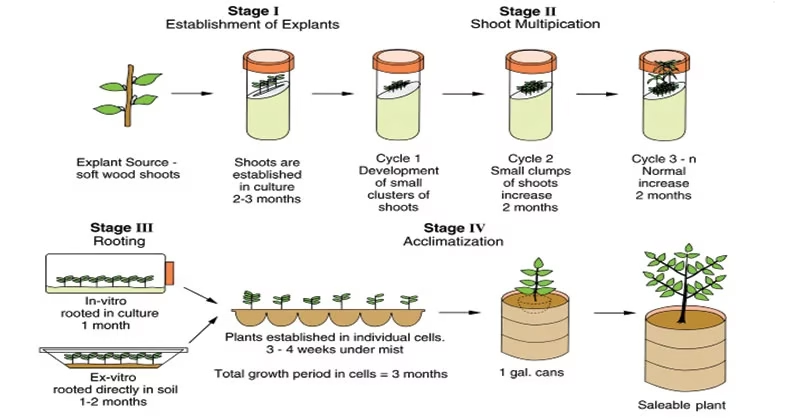
Tissue culture is the technique of growing an entire new plant from a small part of a parent plant, called an explant, under sterile laboratory conditions.
- Explants are grown in a nutrient medium containing a carbon source (like sucrose), organic salts, vitamins, amino acids, and phytohormones.
- This enables rapid multiplication of plants, a process called micropropagation.
- Somaclones: plants produced via tissue culture, genetically identical to each other and to the parent plant.
- Somatic hybridisation: protoplasts (cell content minus cell wall) from two different plants are isolated and fused to form a hybrid protoplast, which then develops into a new plant called a somatic hybrid.
Example: Pomato- a somatic hybrid of potato and tomato protoplasts. It works scientifically but has not proven commercially viable.
Applications of Tissue Culture
- Commercial-scale propagation of plants like apple, banana, and tomato.
- Disease elimination: viruses often fail to reach a plant’s apical and axillary meristems even when the rest of the plant is infected. Culturing just these meristem tissues can produce a completely virus-free plant.
12. Quick FAQ
What is the difference between inbreeding and out-breeding?
Inbreeding mates closely related animals of the same breed to fix desirable genes, increasing homozygosity but risking inbreeding depression. Out-breeding mates unrelated or different-breed/species animals to introduce new genetic variation and hybrid vigour.
What is hybrid vigour?
Also called heterosis, it’s the improved characteristics (higher yield, better growth, disease resistance) seen in the offspring of a cross between two genetically different, superior parents.
Why is Spirulina considered a good source of single-cell protein?
It has a high protein content, grows rapidly on inexpensive waste substrates, and is both economical and environmentally sustainable to cultivate.
What is the main limitation of conventional breeding for disease resistance?
The pool of naturally occurring disease-resistance genes within a species is limited, which is why genetic engineering is increasingly used to bring in resistance genes from unrelated wild species.
What is biofortification?
Breeding crop varieties with naturally higher levels of protein, vitamins, oils, and minerals, to combat micronutrient deficiencies (“hidden hunger”) through everyday food rather than supplements.
Other topics you might be interested in:
Class 12 Biology Notes: Reproduction in Organisms
Sexual Reproduction in Flowering Plants: Class 12 Biology Notes
Human Reproduction Class 12 Notes Biology
Human Reproduction Class 12 Notes Biology
Molecular Basis of Inheritance Class 12 Notes (DNA, RNA, Replication, Transcription & Translation)
Evolution Class 12 Biology Notes: Origin of Life, Darwin’s Theory