Introduction
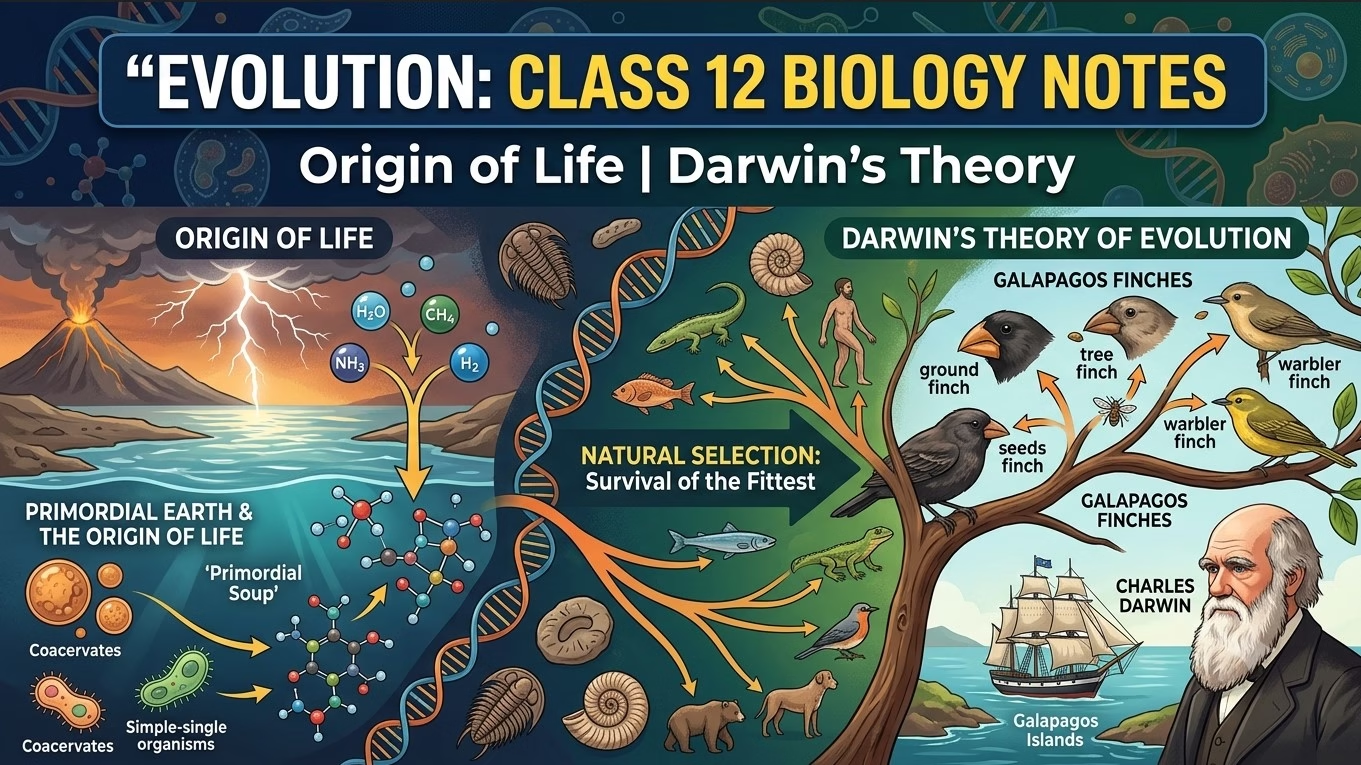
Evolution Class 12 Biology is one of the most important chapters, forming the foundation for understanding how life on Earth diversified from simple molecules into the millions of species alive today. This topic frequently appears in CBSE board exams and competitive exams like NEET. In this guide, we’ll cover the origin of life, theories of evolution, evidences supporting evolution, mechanisms driving evolutionary change, and the evolutionary journey of plants, animals, and humans.
1. Origin of Life: Key Theories and Experiments
Before life could evolve, it first had to originate. Several scientists proposed theories explaining how the first organic molecules and living systems came into being.
| Year | Scientist(s) | Theory/Experiment | Conclusion |
| 1927 | Georges Lemaître | Big Bang theory | The universe originated from the explosion of a hot, primordial substance and has been expanding ever since. |
| 1924–1929 | Oparin and Haldane | Chemical evolution theory | Life was preceded by chemical evolution — simple organic molecules formed from inorganic precursors present on early Earth. |
| 1952 | Stanley Miller and Harold Urey | Laboratory simulation of primitive Earth conditions | Amino acids were synthesised from a mixture of gases resembling the early atmosphere, proving that organic building blocks could form spontaneously. |
The Miller-Urey Experiment Explained
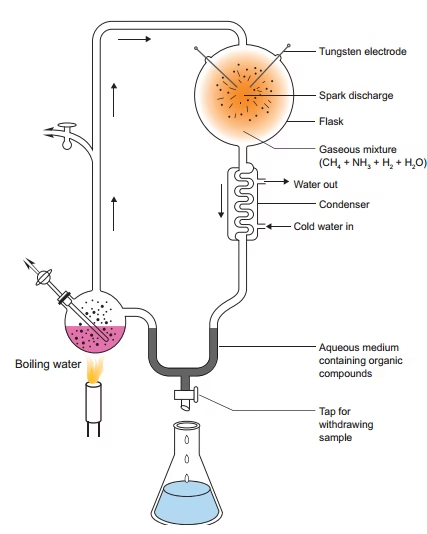
The Miller-Urey experiment is a landmark study in the history of evolutionary biology. Here’s how it worked:
- Earth’s primitive atmosphere is believed to have been extremely hot, with frequent volcanic activity and a reducing atmosphere rich in methane (CH₄), ammonia (NH₃), and hydrogen (H₂).
- Miller and Urey recreated these conditions inside a closed laboratory apparatus, combining these gases with water vapour at around 800°C and passing an electric spark through the mixture (simulating lightning).
- Within days, the flask contained amino acids, simple sugars, and fatty acids– the basic building blocks of life.
This experiment gave strong support to the idea that organic molecules necessary for life could have arisen naturally on early Earth, without any external or supernatural intervention.
2. Theories of Evolution
Darwin’s Theory of Natural Selection
Charles Darwin’s ideas directly challenged the older belief in special creation (the idea that species were individually and divinely created). Key points of Darwin’s theory:
- During his famous voyage on the HMS Beagle, Darwin observed that living organisms across the world shared structural similarities with each other and with extinct fossil forms.
- He concluded that evolution is a gradual process, and organisms best suited to their environment tend to survive and reproduce more successfully- a concept known as natural selection.
- Alfred Russel Wallace, working independently in the Malay Archipelago, arrived at a strikingly similar conclusion, which is why natural selection is sometimes called the Darwin-Wallace theory.
Lamarck’s Theory of Use and Disuse
Jean-Baptiste Lamarck proposed an alternative explanation before Darwin: organs that are used frequently become stronger and more developed, while unused organs weaken over generations, and these acquired traits get inherited. His classic example was the giraffe developing a long neck through repeated stretching to reach high leaves. Unlike Darwin’s theory, Lamarckism has largely been discredited because acquired characteristics are not passed on genetically- only heritable variations (present in genes) are subject to natural selection.
3. Evidences of Evolution
Multiple independent lines of evidence support the theory of evolution:
Fossil Evidence
Fossils are preserved remains or impressions of organisms that lived millions of years ago. Different rock strata (layers), formed at different geological times, contain fossils of different life forms, allowing scientists to trace the sequence of evolutionary change over time.
Comparative Anatomy and Morphology
Homologous organs: Structures that share the same basic anatomical plan and evolutionary origin, even though they may perform different functions today. For example, the forelimbs of humans, bats, whales, and horses have the same bone arrangement despite being used for grasping, flying, swimming, or running respectively. This similarity arises from divergent evolution — different species evolving from a common ancestor.
Analogous organs: Structures that perform similar functions but have different anatomical origins — for example, the wings of birds and butterflies. This is the result of convergent evolution, where unrelated species evolve similar adaptations independently due to similar environmental pressures.
Adaptive Melanism (Industrial Melanism)
A classic example observed in England involves the peppered moth. Before industrialisation, light-coloured moths outnumbered dark (melanised) moths because tree bark was pale, camouflaging the lighter moths from predators. After industrialisation coated tree trunks with soot, dark moths became better camouflaged and increased in number, while lighter moths became easier targets for predators. This is a well-documented, real-world case of natural selection in action.
Resistance in Organisms
The evolution of herbicide- and pesticide-resistant pests and weeds, along with antibiotic-resistant bacteria, provides ongoing, observable evidence of natural selection happening in real time- a topic highly relevant to public health today.
4. Adaptive Radiation
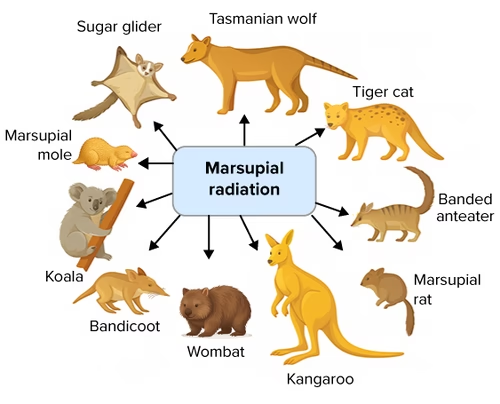
Adaptive radiation is the process by which species originating from a single common ancestor diversify rapidly to fill different ecological niches.
- Darwin’s finches: On the Galápagos Islands, Darwin observed multiple finch species, each with a beak shaped differently depending on their diet, from seed-eaters to insect-eaters, all descended from a common ancestral finch.
- Australian marsupials: A single ancestral marsupial gave rise to a wide variety of forms — kangaroos, koalas, wombats, and the Tasmanian wolf- each adapted to a different lifestyle. Interestingly, placental mammals elsewhere in the world independently evolved strikingly similar body forms (e.g., the placental wolf resembling the Tasmanian wolf), an example of convergent evolution occurring when adaptive radiation happens separately in isolated regions.
5. Mechanism of Evolution
Natural Selection: The Core Mechanism
According to Darwin, evolution proceeds through natural selection, guided by two central concepts:
- Branching descent– all species descend, with modification, from common ancestors.
- Natural selection– individuals best adapted to their environment survive and reproduce more successfully (“survival of the fittest”), passing favourable traits to the next generation.
The Role of Genetics: Mendel, de Vries, and Modern Synthesis
Darwin could not explain how variation and inheritance actually worked at a molecular level- this gap was filled later by genetics:
- Gregor Mendel identified that inheritable “factors” (now called genes) control an organism’s traits.
- Hugo de Vries, based on his studies on the evening primrose plant, proposed that variation arises from mutations– sudden, random, and directionless changes in genetic material. He called large, single-step mutations that lead to speciation saltation. This differs from Darwin’s idea of small, gradual, directional variation.
- The modern understanding, called the Modern Synthesis, combines Darwinian natural selection with Mendelian genetics and population genetics to explain evolution comprehensively.
6. Hardy-Weinberg Principle
The Hardy-Weinberg principle provides a mathematical baseline for measuring evolutionary change at the population level.
- It states that allele frequencies in a population remain constant across generations unless disturbed by external factors- this stable state is called genetic equilibrium.
- For a gene with two alleles (A and a) with frequencies p and q respectively:
- p + q = 1
- Genotype frequencies: AA = p², Aa = 2pq, aa = q²
- Therefore: p² + 2pq + q² = 1 (the expansion of (p + q)²)
- When the observed genotype frequencies deviate from those predicted by this equation, it indicates that evolution is occurring in that population.
Factors That Disturb Hardy-Weinberg Equilibrium
- Gene flow / migration– movement of alleles into or out of a population
- Genetic drift– random, chance-driven changes in allele frequency, especially significant in small populations
- Mutation– the ultimate source of new genetic variation
- Genetic recombination– reshuffling of alleles during sexual reproduction
- Natural selection– differential survival and reproduction based on fitness
Founder Effect
Sometimes a small group becomes isolated from the original population and, purely by chance, carries a different allele frequency. Over generations, this drifted population may accumulate enough genetic differences to become a distinct species- a phenomenon called the founder effect. Advantageous mutations reinforced by natural selection over many generations eventually lead to new phenotypes and speciation.
7. Evolution of Plants
- The earliest cellular life forms appeared on Earth roughly 2,000 million years ago.
- Some early cells developed the ability to carry out photosynthesis-like reactions, releasing oxygen.
- Over time, single-celled organisms gave rise to multicellular life.
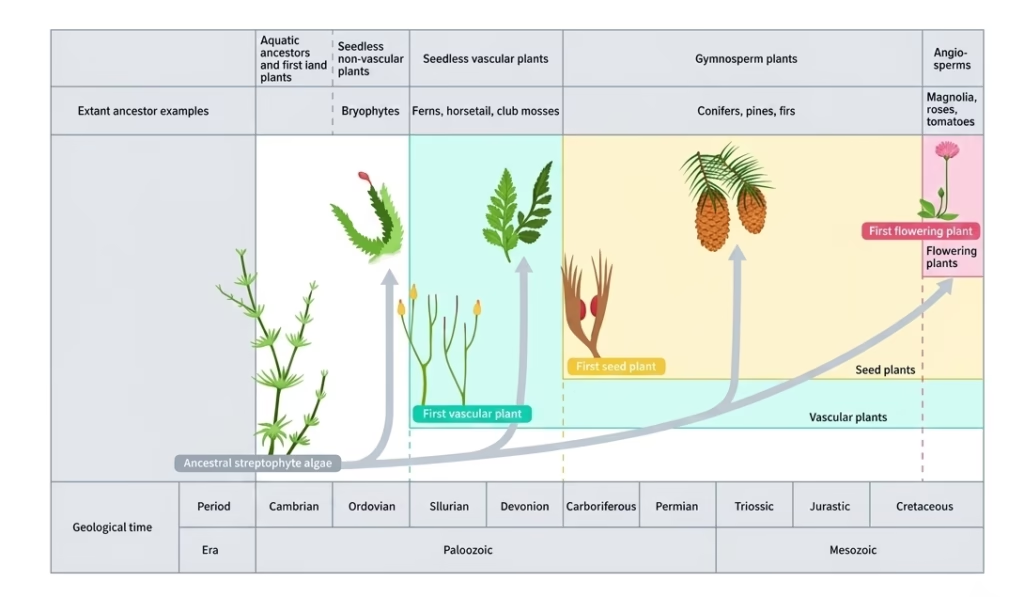
- Seaweeds and early land plants are believed to have existed around 320 million years ago, eventually diversifying into bryophytes, ferns, gymnosperms, and finally flowering plants (angiosperms).
8. Evolution of Animals
- Animals first evolved around 500 million years ago, beginning with invertebrates.
- Jawless fishes appeared roughly 350 million years ago.
- Certain fish species capable of moving onto land and returning to water gave rise to the first amphibians. Notably, the Coelacanth, a lobe-finned fish once thought to be extinct, was rediscovered off the coast of South Africa in 1938- this lineage is believed to be closely related to the ancestors of amphibians.
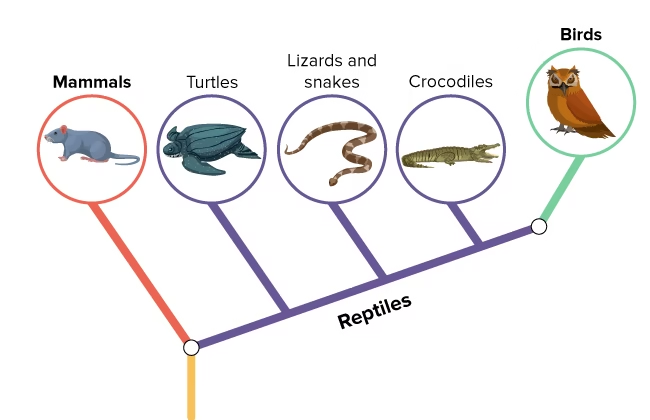
- Amphibians eventually evolved into reptiles, which dominated Earth for roughly 200 million years before a mass extinction wiped out the dinosaurs about 65 million years ago.
- The earliest mammals were small, shrew-like creatures. When continental drift joined North and South America, many primitive mammals faced increased competition and declined, while Australia’s isolated pouched mammals (marsupials) thrived due to a lack of competitors.
9. Origin and Evolution of Man
Human evolution is a gradual process spanning millions of years, marked by increasing brain capacity, upright posture, and tool use.
| Time Period | Species/Stage | Key Characteristics |
| 15 million years ago | Dryopithecus (ape-like) and Ramapithecus (man-like) | Hairy, walked similar to chimpanzees |
| 3-4 million years ago | Early man-like primates | Not very tall, but walked upright |
| 2 million years ago | Australopithecines (also called Homo habilis), East Africa | Human-like; used stone tools; ate fruit; brain capacity of 650-800 cc; not primarily meat eaters |
| 1.5 million years ago | Homo erectus | Brain capacity of about 900 cc; ate meat |
| 1,00,000-40,000 years ago | Neanderthal man | Brain capacity of about 1,400 cc; used animal hides for clothing |
| 75,000-10,000 years ago | Homo sapiens | Modern humans; the species we belong to today |
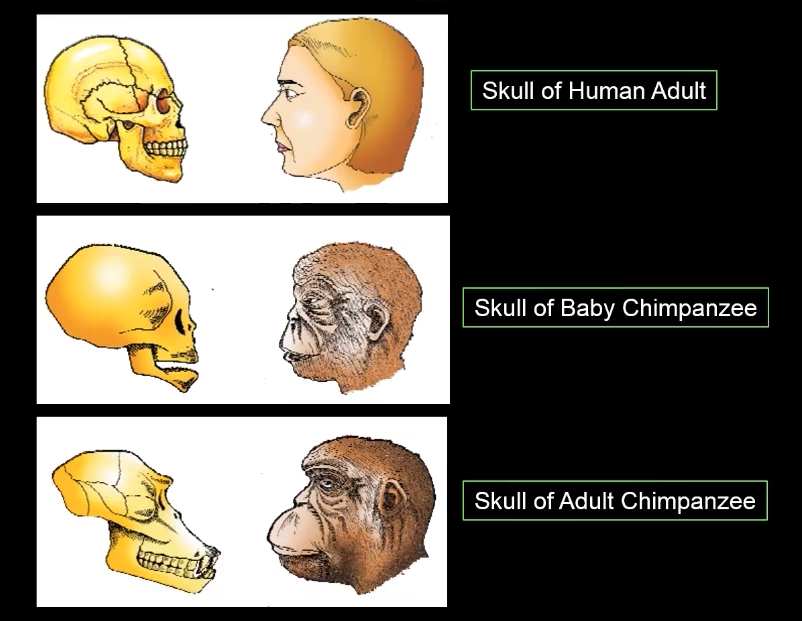
Interesting fact: When comparing the skulls of an adult human, a baby chimpanzee, and an adult chimpanzee, the baby chimpanzee’s skull structure resembles that of a human more closely than the adult chimpanzee’s does- an observation that supports evolutionary developmental links between humans and other primates.
Frequently Asked Questions (FAQs) on Evolution- Class 12
Q1. What is the difference between homologous and analogous organs? Homologous organs share the same basic structure and evolutionary origin but may serve different functions (divergent evolution), while analogous organs perform the same function but have different structural origins (convergent evolution).
Q2. What is the significance of the Hardy-Weinberg principle? It provides a mathematical model of genetic equilibrium, allowing scientists to detect whether evolutionary change is occurring in a population by comparing observed allele/genotype frequencies to expected values.
Q3. Why is the Miller-Urey experiment important? It experimentally demonstrated that organic molecules like amino acids could form spontaneously under conditions resembling early Earth’s atmosphere, supporting the theory of chemical evolution.
Q4. What is adaptive radiation? Give an example. Adaptive radiation is the diversification of a single ancestral species into multiple forms adapted to different ecological niches. Darwin’s finches on the Galápagos Islands are a classic example.
Q5. How is natural selection different from Lamarckism? Natural selection (Darwin) proposes that heritable variations already present in a population are selected for based on survival and reproductive success. Lamarckism proposed that traits acquired during an organism’s lifetime (through use or disuse) could be inherited — an idea not supported by modern genetics.
These notes are designed for Class 12 Biology board exam preparation and NEET aspirants. For more chapter-wise notes, explore related topics like Genetics, Molecular Basis of Inheritance, and Ecology on this website.
Other topics you might be interested in:
Class 12 Biology Notes: Reproduction in Organisms
Sexual Reproduction in Flowering Plants: Class 12 Biology Notes
Human Reproduction Class 12 Notes Biology
Principles of Inheritance and Variation — Class 12 Biology Notes