Microbes in Human Welfare Class 12 Biology Notes
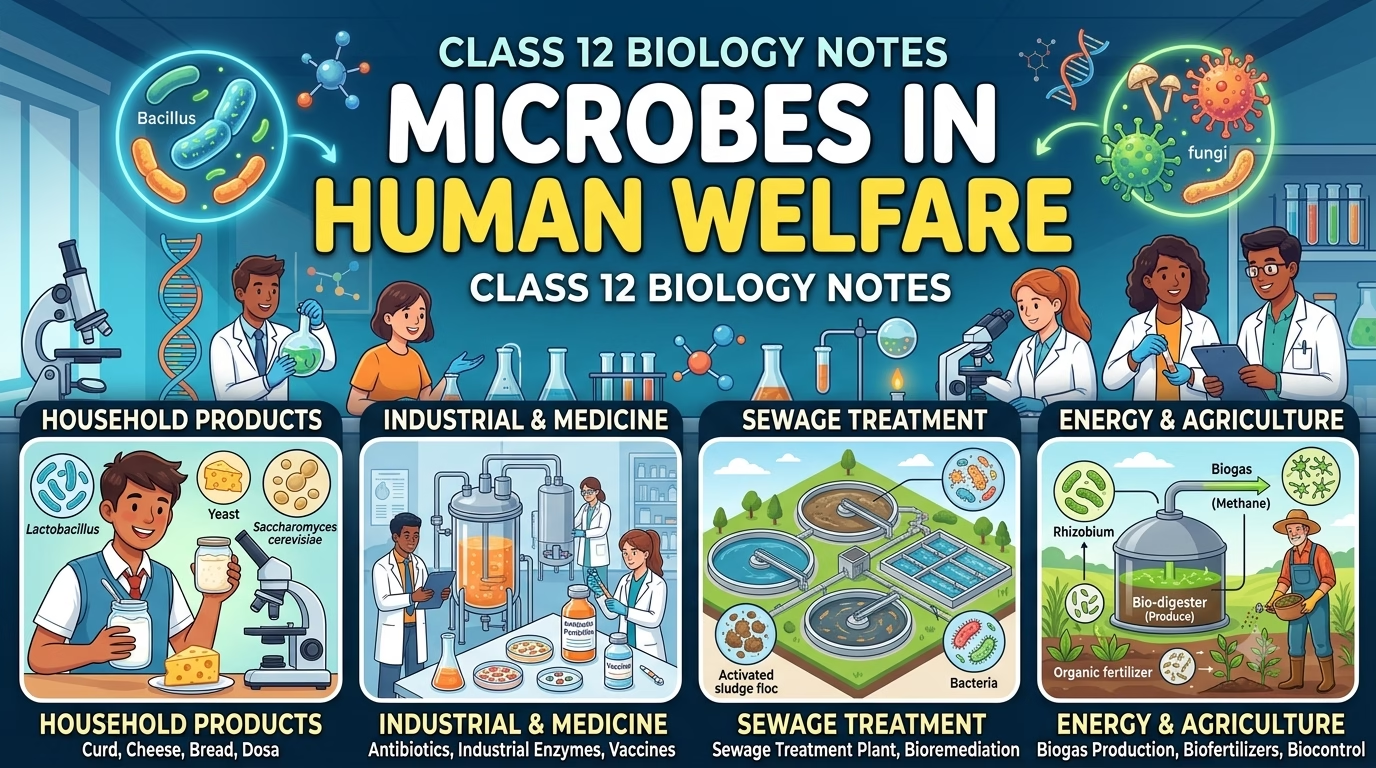
Class 12 Biology notes on Microbes in Human Welfare- LAB, antibiotics, sewage treatment, biogas, biocontrol agents & biofertilisers. NCERT-aligned.
Class 12 Biology notes on Microbes in Human Welfare- LAB, antibiotics, sewage treatment, biogas, biocontrol agents & biofertilisers. NCERT-aligned.
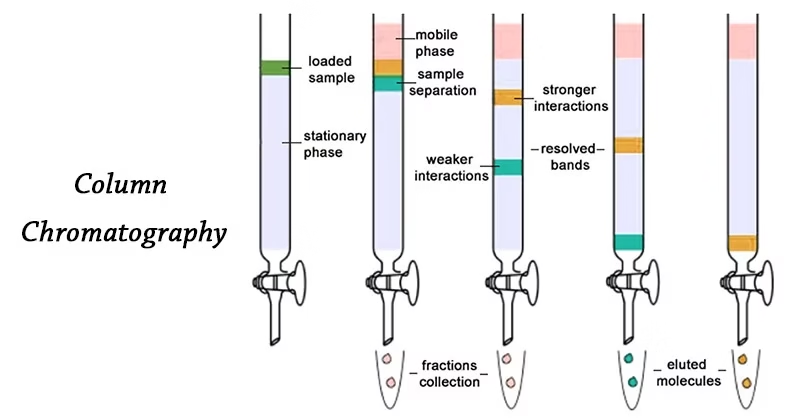
Column Chromatography is one of the most important methods used in biochemistry, analytical chemistry, and biotechnology for separating and purifying components of a mixture.
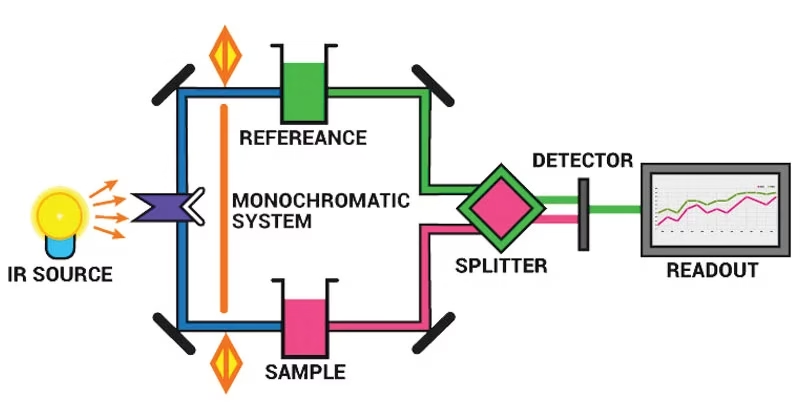
Infrared (IR) Spectroscopy, also called Vibrational Spectroscopy, is an analytical technique that studies the interaction of infrared radiation with matter.

NMR Spectroscopy (Nuclear Magnetic Resonance Spectroscopy) is one of the most advanced and widely used analytical techniques in modern chemistry and biology.
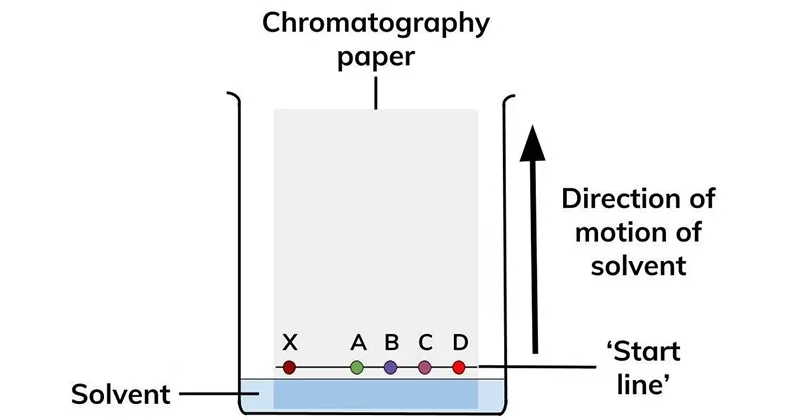
Paper Chromatography (PC) is a form of planar chromatography where the separation takes place on a specialized filter paper. Learn its definition, principle, types, steps, Rf values, applications, advantages, and limitations in detail.
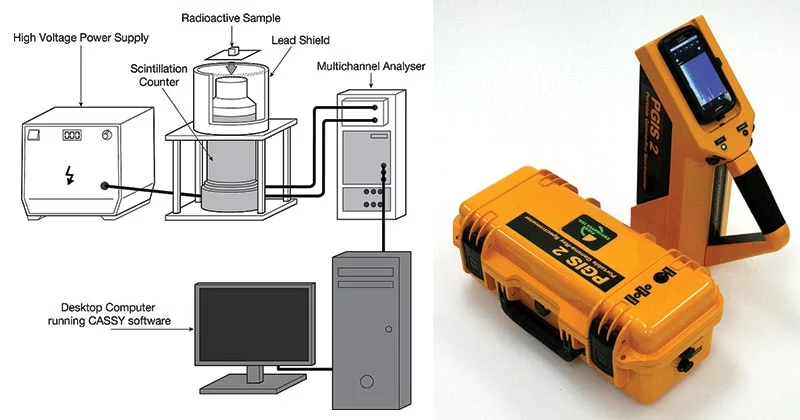
Gamma-ray spectroscopy (GRS) is a technique that measures the energy distribution of gamma rays emitted by a radioactive sample. By analyzing this spectrum, scientists can identify and quantify specific isotopes present in the material.
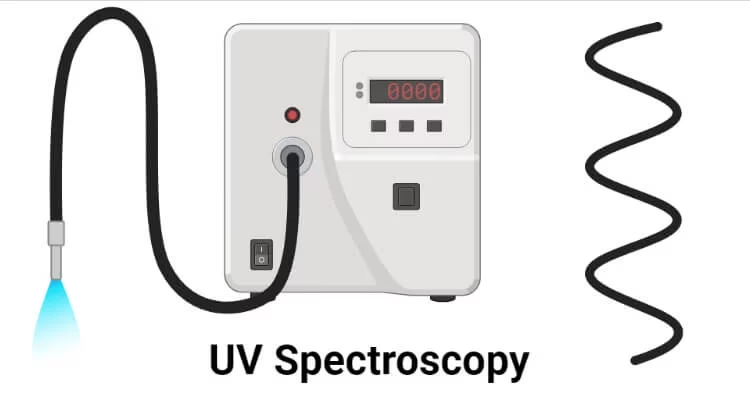
UV Spectroscopy is an analytical technique that studies how molecules absorb ultraviolet light. Learn the definition, principle, types of electronic transitions, instrumentation, steps, uses, advantages, and limitations of UV spectroscopy in detail.

X-Ray Spectroscopy is a powerful analytical technique used to identify and study materials by their X-ray emissions. Learn its principle, parts, working, applications, advantages, and limitations in detail.
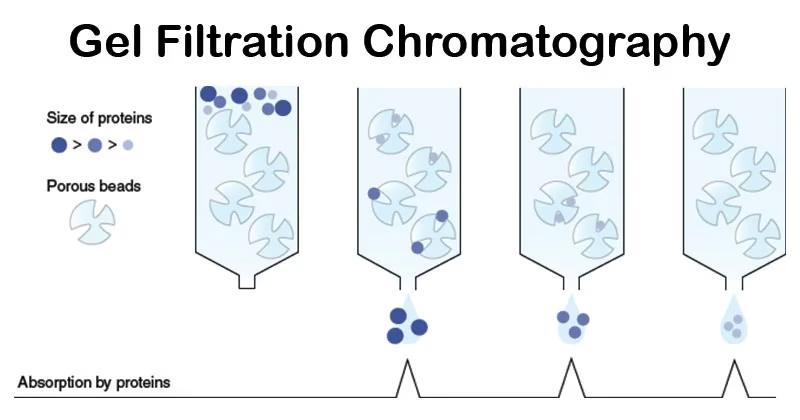
Gel Filtration Chromatography (GFC), also known as Size Exclusion Chromatography, is a separation technique used to isolate biomolecules based on size. Learn its principle, parts, steps, types, uses, advantages, and limitations in detail.
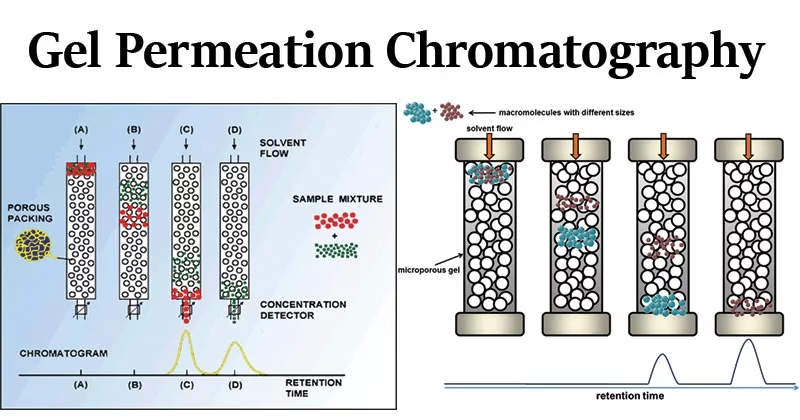
Gel Permeation Chromatography (GPC), also called Size Exclusion Chromatography (SEC) or Gel Filtration Chromatography, is a powerful separation technique widely used in biochemistry, biotechnology, and polymer science.