Gas Chromatography (GC) – Principle, Parts, Procedure, Steps, Applications, Advantages & Limitations
Gas Chromatography (GC) is a powerful analytical technique used to separate, identify, and quantify compounds that can exist in the gaseous phase.
Instrumentation refers to the collection of tools, devices, and techniques used to measure, analyze, and test biological systems.
In biology, this field is often called bioinstrumentation and is considered a branch of biomedical engineering. It focuses on combining engineering innovations with medical and biological research to improve the way we study and diagnose living systems.
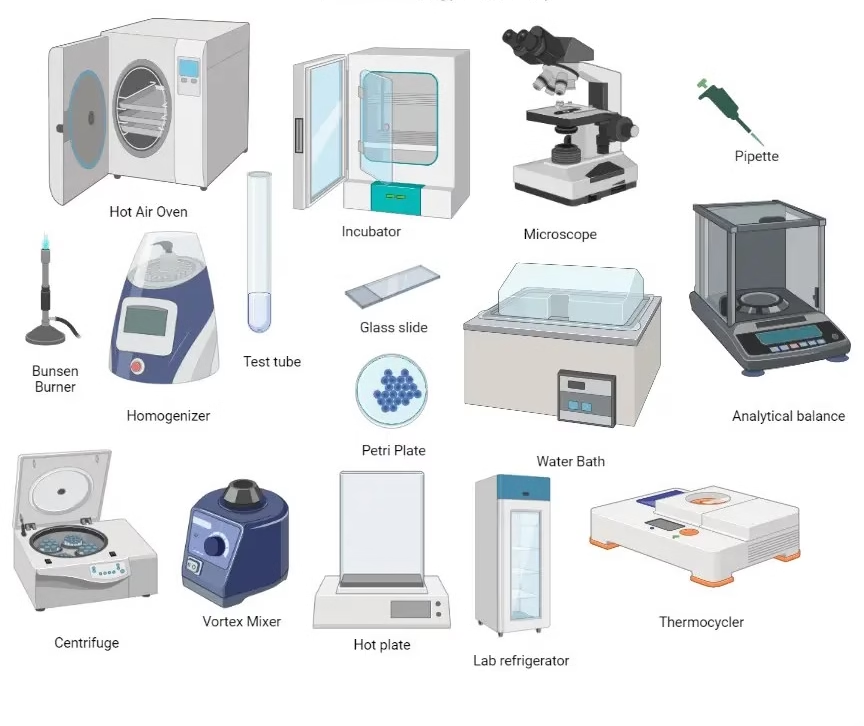
From common laboratory equipment like centrifuges, autoclaves, and microscopes to advanced techniques such as chromatography and electrophoresis, instrumentation plays a crucial role in research and diagnostics. It helps scientists understand the working mechanisms of devices, their components, and how they can be applied in experiments.
Instrumentation is not limited to research labs. In modern agriculture, bio-instruments are used to monitor soil quality, measure plant growth, and track physiological activities such as carbon dioxide exchange and net photosynthesis rates.
In molecular biology, advanced tools like RT-PCR, blotting techniques, and biosensors are used for genetic testing, disease diagnosis, and DNA sequence comparison. These innovations make medical processes faster, more accurate, and highly reliable.
Other important techniques like spectroscopy and colorimetry have made it easier to measure solution concentrations and detect radioisotopes with precision.
As technology advances, bioinstrumentation continues to evolve, introducing new devices, faster methods, and more efficient diagnostic tools. This growth is making instrumentation an essential part of every biological field, from agriculture and environmental monitoring to biomedical research and healthcare diagnostics.
Following are the direct links to various topics of Instrumentation in Biology:-
PCR Machine – Principle, Steps, Types, and Applications: https://easybiologynotes.com/pcr-machine/
Chromatography – Principle, Types, Steps, Uses, and Advantages: https://easybiologynotes.com/chromatography/
Affinity Chromatography – Principle, Components, Procedure, Applications & Advantages: https://easybiologynotes.com/affinity-chromatography/
Adsorption Chromatography – Principle, Types, Procedure, Applications & Advantages: https://easybiologynotes.com/adsorption-chromatography/
Centrifuge – Principle, Parts, Types, Operation, Applications and Advantages: https://easybiologynotes.com/centrifuge/
Pipettes – Principle, Types, Uses, Parts, Operation, Advantages & Precautions: https://easybiologynotes.com/pipettes/
Bunsen Burner – Principle, Parts, Types, Flames, Applications, Advantages & Precautions: https://easybiologynotes.com/bunsen-burner/
Centrifugal Force and Centripetal Force – Definition, Differences, Principles, Examples & Applications: https://easybiologynotes.com/centrifugal-force-and-centripetal-force/
Mass Spectrometry – Principle, Steps, Instrumentation, Types & Applications: https://easybiologynotes.com/mass-spectrometry/
High-Performance Liquid Chromatography (HPLC) – Principle, Instrumentation, Types & Applications: https://easybiologynotes.com/high-performance-liquid-chromatography-hplc/
Gas Chromatography (GC) is a powerful analytical technique used to separate, identify, and quantify compounds that can exist in the gaseous phase.
A pH meter is a modern electronic device that measures hydrogen ion concentration in a solution and displays it directly as a pH value.
A Laminar Flow Hood (also called Laminar Flow Cabinet) is a special enclosed workstation designed to maintain a contamination-free environment in laboratories.
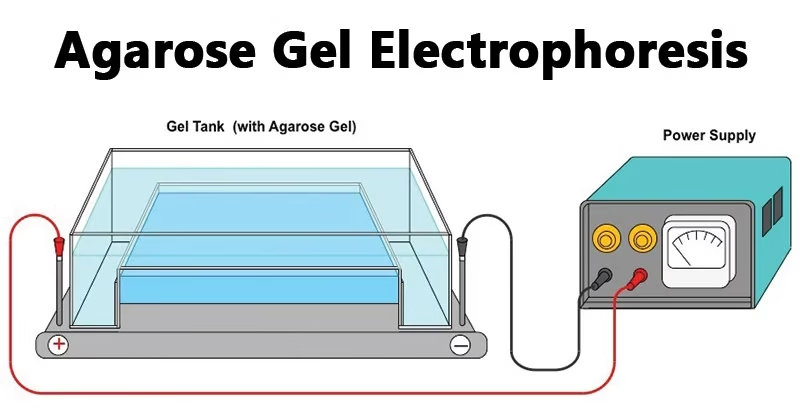
Agarose Gel Electrophoresis is one of the most widely used techniques in molecular biology, genetics, and biochemistry. It plays a central role in DNA and RNA analysis, genetic fingerprinting, and even in medical diagnostics. This method allows scientists to separate and visualize nucleic acids (DNA and RNA) based on their size and charge.
An autoclave is a steam sterilizer widely used in microbiology, medicine, and industries. Learn about its principle, parts, types, working procedure, applications, advantages, limitations, and safety precautions.
Hot Air Oven is a laboratory sterilization equipment based on dry heat. Learn its principle, parts, types, working steps, applications in microbiology, advantages, limitations, and safety precautions.
Learn about the major instruments used in microbiology labs, including their principles, working, and applications. Covers autoclave, microscope, centrifuge, spectrophotometer, incubator, pH meter, laminar hood, and more.
Ion Exchange Chromatography is a powerful separation technique based on charge differences of molecules. Learn the principle, types of exchangers, instrumentation, working steps, applications, advantages, and limitations of ion exchange chromatography.
A bioreactor is a specialized vessel used for biological reactions and fermentation processes. It provides a controlled environment where microorganisms, plant cells, or animal cells can grow and produce useful products like antibiotics, enzymes, organic acids, and biofuels.
High-Performance Liquid Chromatography (HPLC) is one of the most powerful and widely used techniques in modern laboratories. It helps to separate, identify, and quantify different components of a mixture with high accuracy and efficiency.